I’m a Designer with over a decade of professional experience, leading strategic ideas that balance desired outcomes and business goals, into digital products at scale.
Curiosity keeps me hungry.
I'm constantly expanding my knowledge and improving my craft in everything I put my head into. Lately, I've been obsessed with specialty coffee and keeping my Duolingo streak intact.
Adaptable but ambitious.
I'm easy to fit in at any environment but I always try to push the boundaries. Everything starts with a plan.
Collaboration is key.
I've been lucky enough to share my journey with amazing teams and individuals who helped me look at the world as I see it today.
What I've been doing
Dashlane
—
2024/25
Improving granular access with clarity
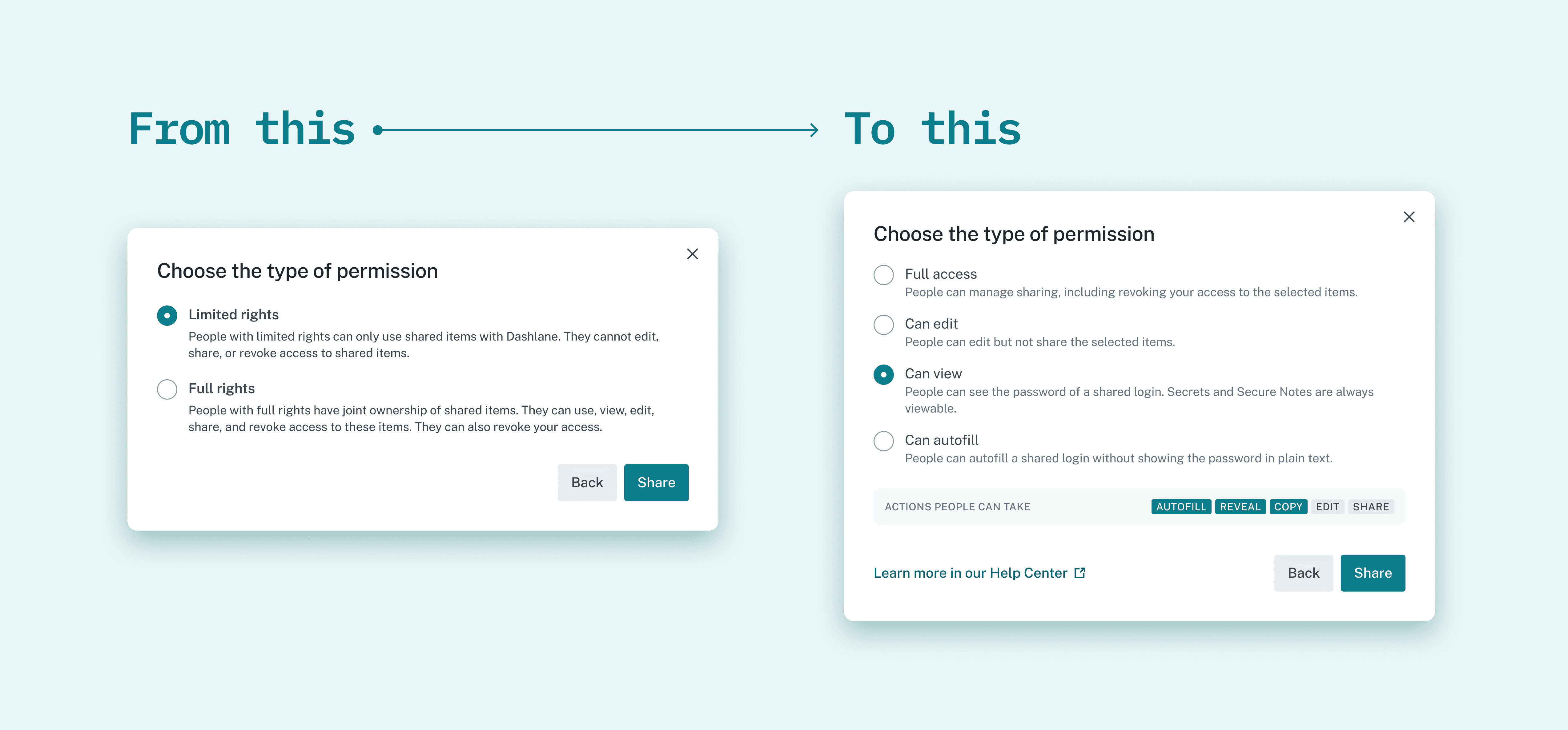
A new set of Permissions that allows sharing credentials and sensitive information with clarity, addressing real business needs while meeting users' expectations.
Secure credential sharing was a top reason why organizations chose Dashlane, but most customers were frustrated with existing “Full Rights” and “Limited Rights” permissions, which were all-or-nothing by design. This limitation affected both user satisfaction and sales, as missing granular control lost key enterprise deals. There were significant business consequences attributed to gaps in sharing permissions. Expanding permission control was needed to address these gaps and help users better understand what they could and could not do with shared credentials.
Contribuitions
Lead Product Design
Research
Strategy
Ease of use
Business fit
Granularity
Insights from early survey ran post launch.
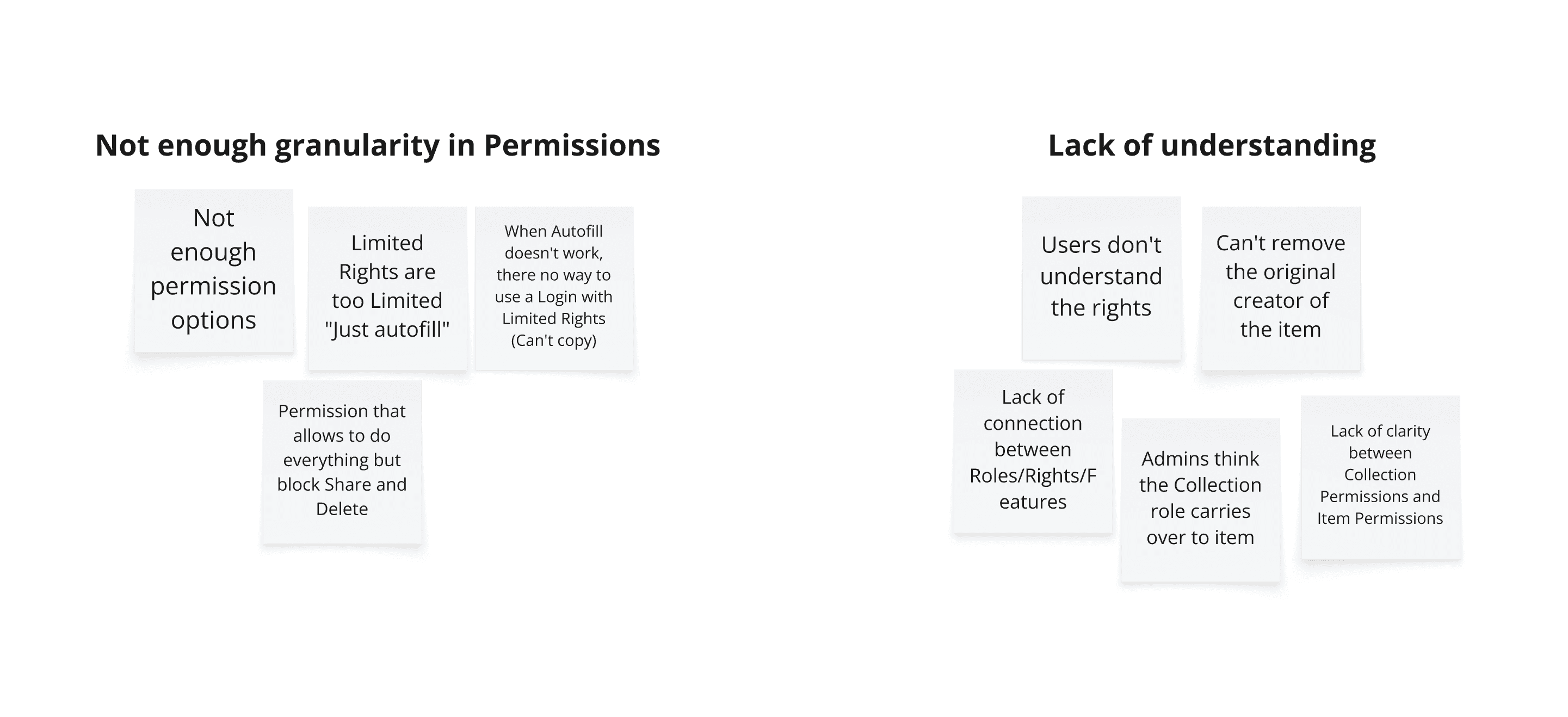
Main problems to solve. Insights from ProductBoard analysis
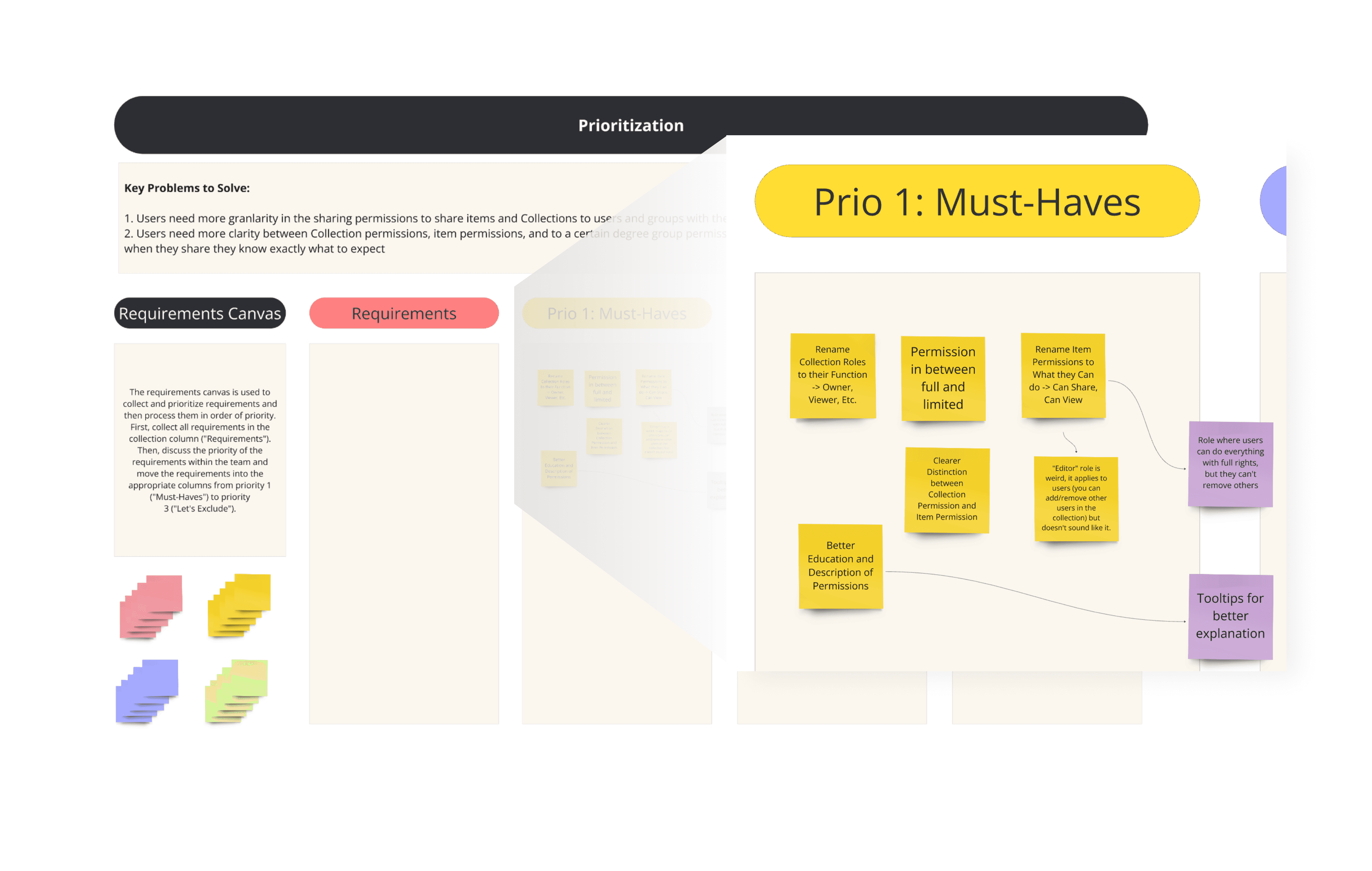
Prioritization of Solutions from 3 main workshops with:
Sales, Design, and Sharing & Vault team
Hypotheses
By expanding our Permission offering, we believe that our users will have a system that better matches their expectations and their needs, not only from a productivity perspective, but also, they will better understand, with a given Permission, what they can or cannot do inside Dashlane.
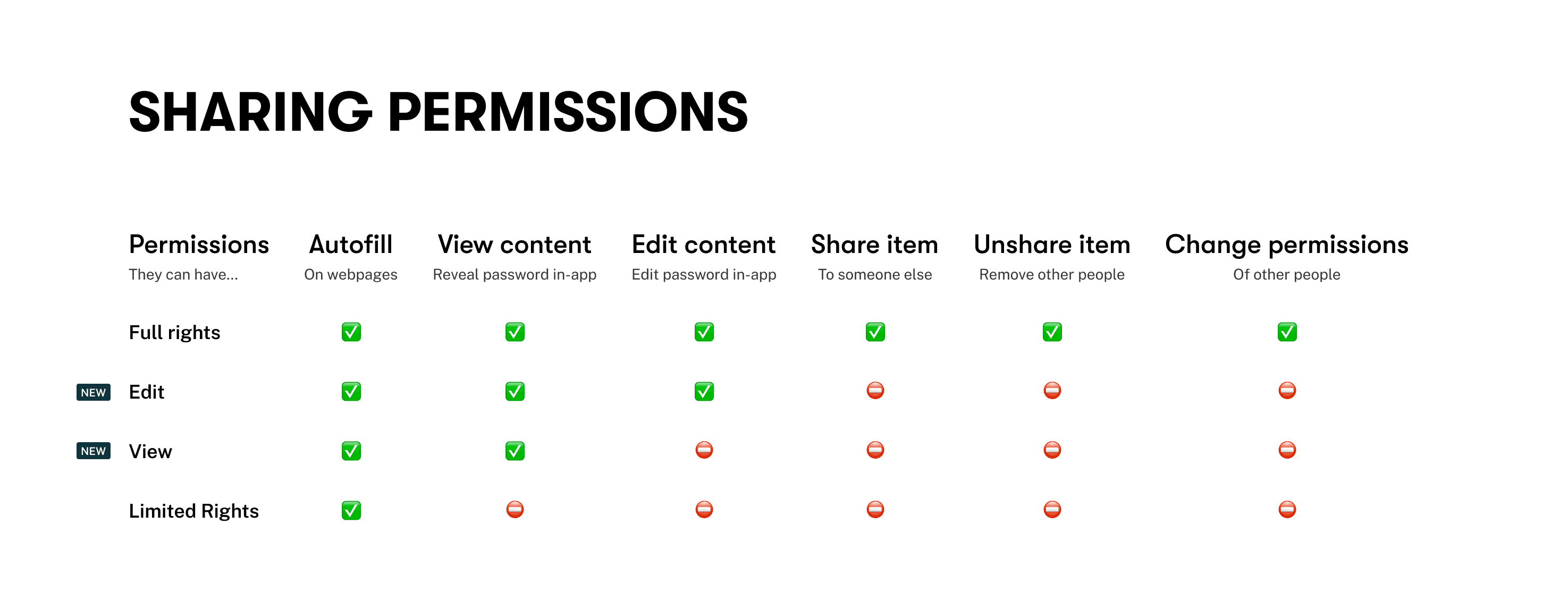
Map of Permissions and capabilities to indentify the gaps
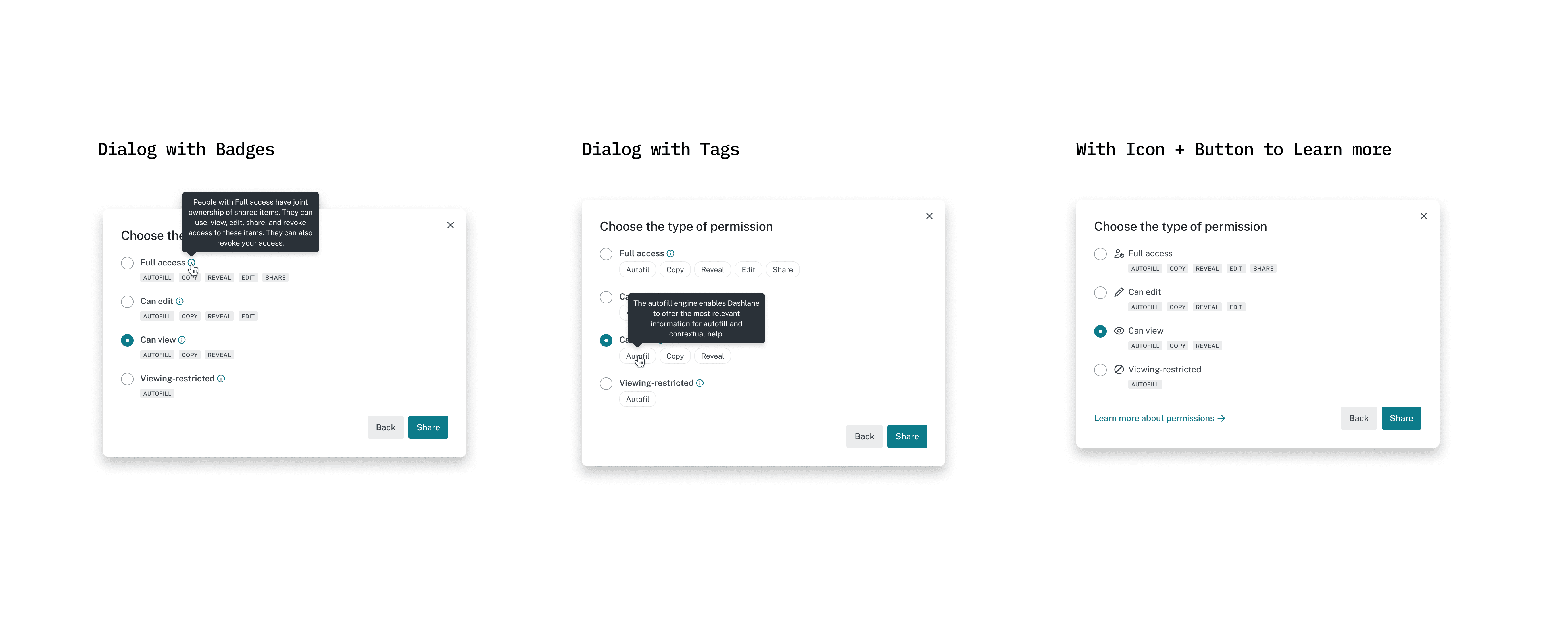
Multiple iteration exploring different components
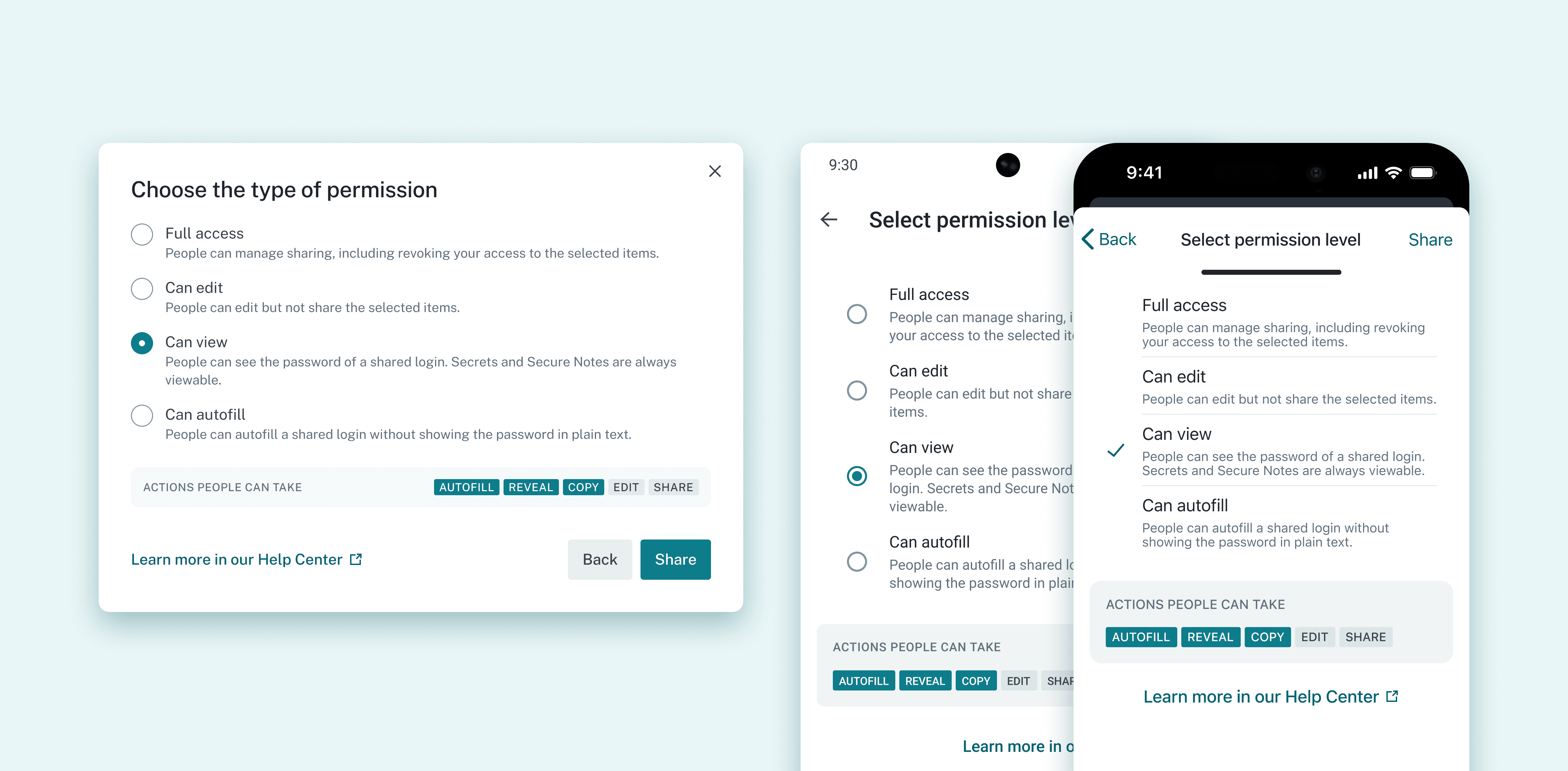
This resulted in a cohesive, end‑to‑end sharing experience where each permission level clearly communicates what people can see, do, and control with shared credentials, reducing ambiguity and giving admins confidence that access now matches their expectations.
Dashlane
—
2023
A secure way to organize and share items
An experience that allows businesses and individuals to organize and share their items securely
Dashlane is a credential manager used by teams to securely store and share logins at scale, but the existing model only supported sharing individual items, making organization and collaboration painful for larger, more complex organizations. Admins told us they were buying Dashlane primarily for sharing, yet the lack of a scalable, flexible way to organize and share credentials was blocking enterprise adoption and was a recurring reason in lost deals. Collections (our “folder sharing” evolution) was conceived as the first building block to move Dashlane upmarket, rethinking how teams organize, share, and manage access to many credentials at once.
Contibuitions
Lead Product Design
Research
Strategy
New ARR
Engagement
Teams using Collections
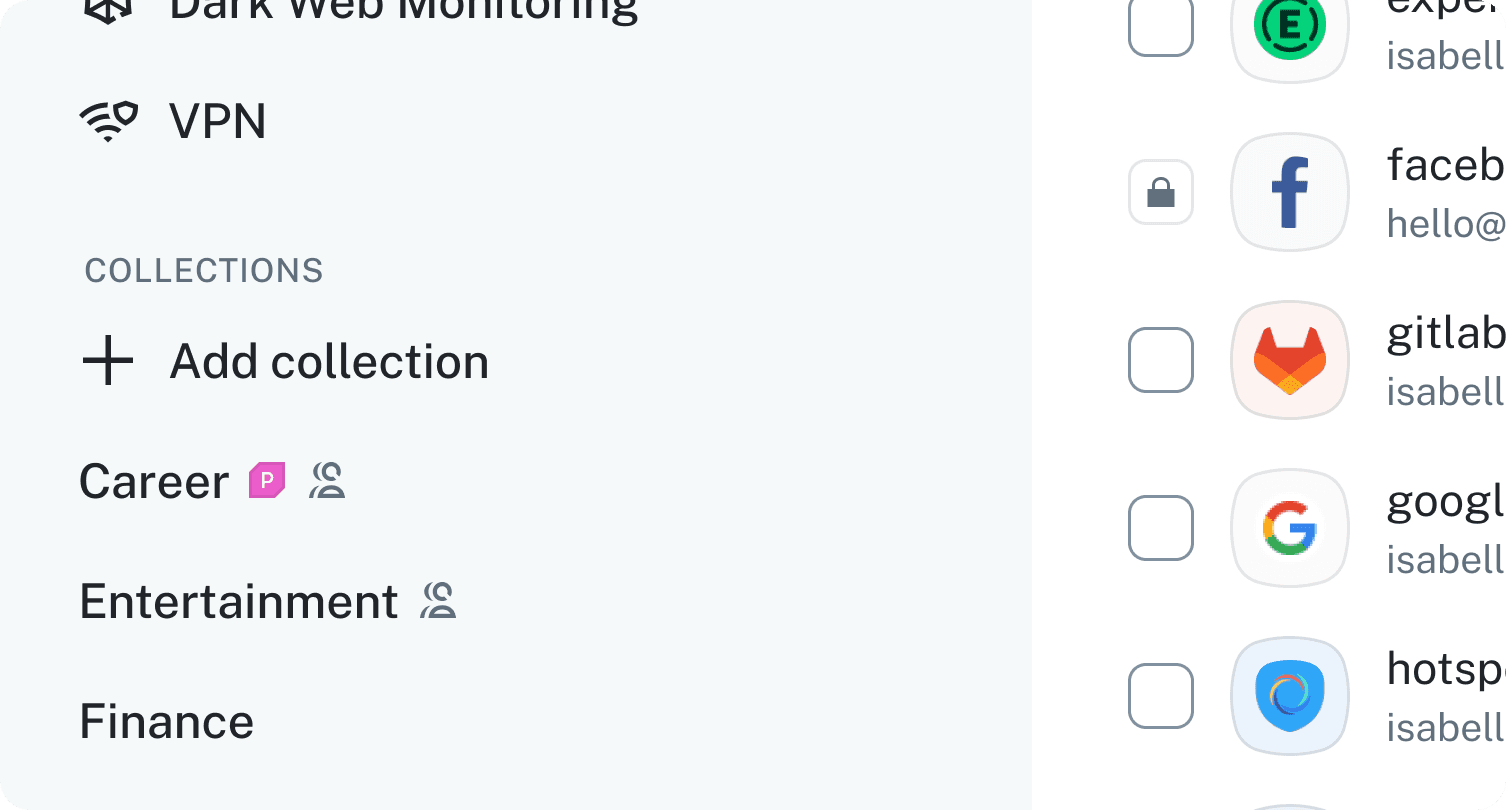
Tags, Folders or something else?
From a technical architecture standpoint, it didn't make sense to have folders because we wanted the items to be part of multiple containers without having multiple instances. And tags would be hard to follow from a container standpoint.
So we followed the Playlist model, where a given song can be part of multiple playlists, and we translated that to our model, where a given credential could be part of multiple containers, maintaining its source of truth, where we could fit our existing sharing architecture: We came up with Collections.
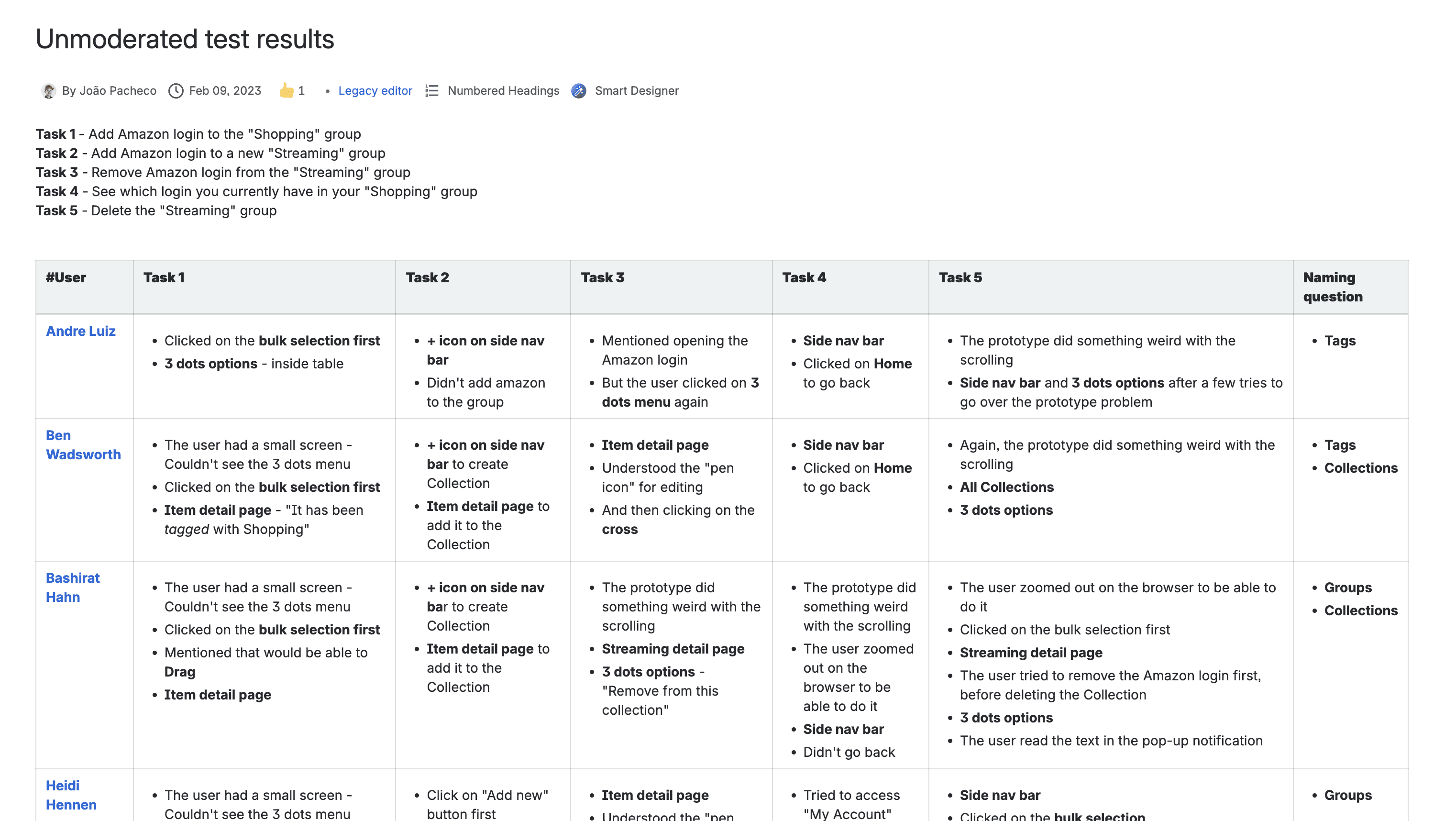
To increase our confidence, we ran an Unmoderated test with some initial prototypes where we had basic CRUD flows to help us prioritize which ones to build first, and a score test in the end to have a better indication of the naming.
The test showed that the Collections model is easy to understand and largely works as intended, even when the prototype was buggy. The main opportunities were to make row-level actions more visible, and better clarify what happens when deleting a Collection. “Collections” was also the strongest, most natural name compared with Tags, Folders, or Groups.
Adding a Collection in the detail page
Creating and adding a Collection in the main navigation
Sharing a Collection





Traveling

Live music

Triathlon